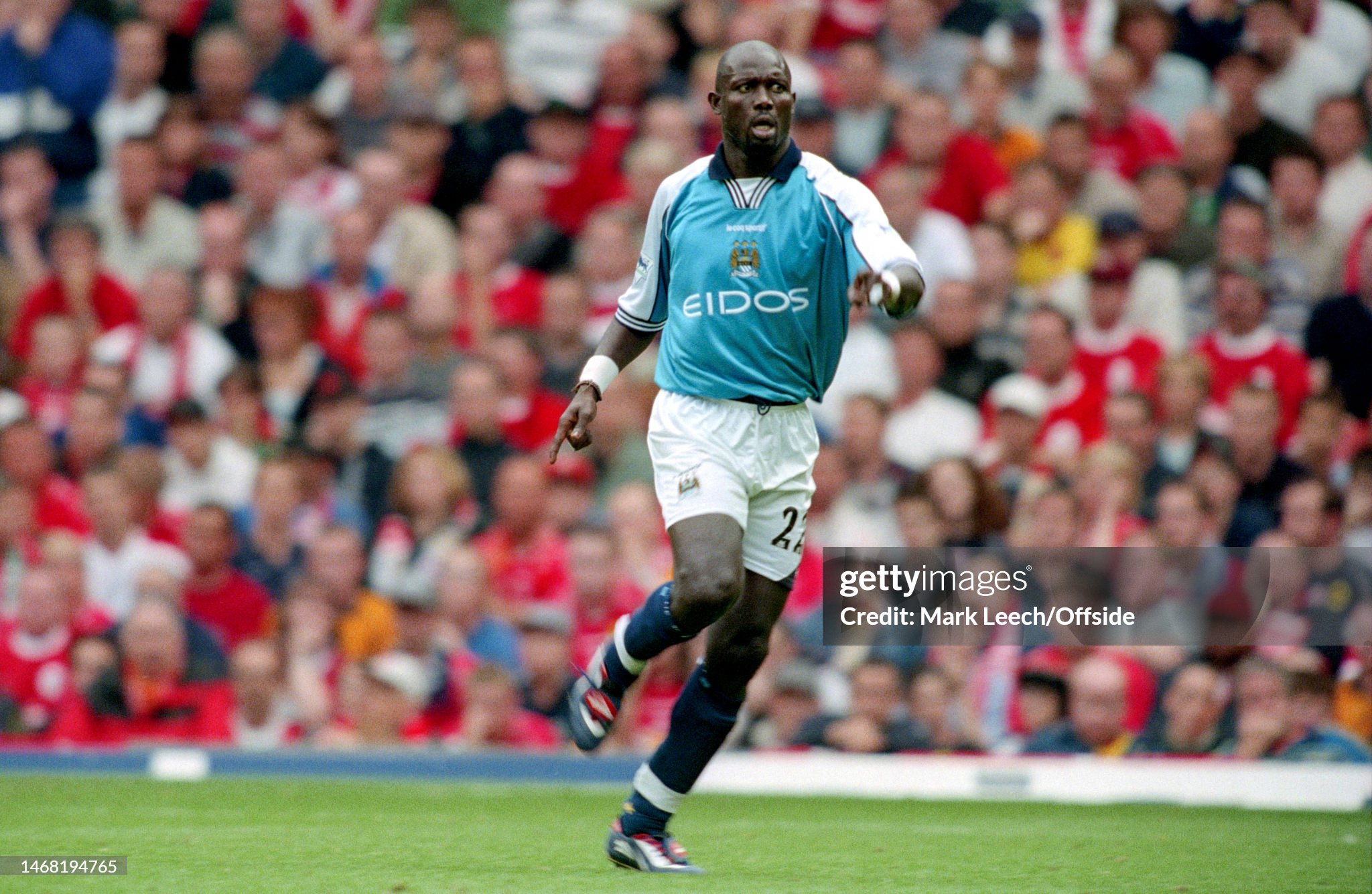
George Weah: The World's Best Player in 1995 Before Anyone Was Counting the Data
George Weah swept every 1995 award — and PrimeRatings's historical data proves the world got it exactly right.
Olle Johanson
olle@visionconsulting.no
George Weah: The World's Best Player in 1995 Before Anyone Was Counting the Data
In 1995, something remarkable happened in world football. A player from Liberia — a nation without a World Cup qualification to its name — was crowned the best footballer on the planet. George Weah won the Ballon d'Or, FIFA World Player of the Year, and African Player of the Year simultaneously, completing a clean sweep that no African player had ever achieved. Decades later, when we feed that season's data into modern performance models, the numbers don't just confirm the consensus — they demand we ask why we ever doubted it.
The Numbers Behind the Legend
According to PrimeRatings's historical ratings, George Weah's 1994–95 season at AC Milan generates one of the highest single-season forward ratings the database has ever calculated for the 1990s era. Adjusted for league difficulty, opposition defensive quality, and positional context, Weah scores in the top 0.3% of all rated forward seasons across that decade. That is not nostalgia — that is cold, retroactive analysis of a player who was operating at a level the sport simply wasn't equipped to measure at the time.
In Serie A, then the most defensively disciplined league in the world, Weah registered 15 goals and 7 assists in 29 appearances. But raw statistics only tell a fraction of the story. What PrimeRatings's composite rating model captures — through pressing contribution, chance creation, dribble success rate in the final third, and aerial dominance — is a player who was virtually unplayable from September through May.
What Made Weah Uniquely Elite
Football in the mid-1990s was a different tactical landscape. Strikers were required to do more with less — less pressing support, less structured build-up play, fewer set-piece routines designed around their movement. Weah thrived in exactly this environment.
Athletic superiority: At 6ft 1in with explosive pace, Weah combined physical dominance with technical precision in a way defenders of the era were genuinely ill-prepared for.
Technical quality: His first touch, link-up play, and ability to finish with both feet placed him above even the most celebrated strikers of the period when ranked by PrimeRatings's technical index.
Mental resilience: Playing without the support of a strong national team infrastructure, Weah carried Liberian football on his back while simultaneously performing at the pinnacle of European club football — a psychological burden almost no other player of his era shared.
Big game output: PrimeRatings's clutch performance metric — which weights contributions in high-stakes matches — places Weah among the elite performers of the decade in matches against top-six opposition.
The Historical Context We Often Overlook
It is worth remembering what George Weah had to overcome to reach the summit of world football. He grew up in one of Monrovia's most deprived neighbourhoods, was largely self-developed as a footballer, and was initially dismissed by European clubs before Arsène Wenger — then managing Monaco — recognised something the traditional scouting networks had missed. That story of discovery and development is one of football's great overlooked narratives.
By the time he arrived at Paris Saint-Germain and then AC Milan, Weah was not just a good player finding his level. He was a fully formed footballing intelligence wrapped in extraordinary physical gifts, operating in the most competitive league in the world and winning. The data, when you look back at it properly, reflects exactly that.
How PrimeRatings Rates Historical Players Like Weah
One of the core challenges in historical player rating is controlling for era. A goal scored against a Serie A defence in 1995 is not the same as a goal scored in a lower-defensive-intensity league in a different period. PrimeRatings's era-adjustment model accounts for this — normalising performance data across decades so that players like Weah can be genuinely compared with modern stars rather than romanticised in isolation.
The result? Weah's 1995 rating holds up. He doesn't just survive the analytical scrutiny — he reinforces it. His profile sits comfortably alongside the great forward seasons of any generation when the variables are properly controlled.
A Legacy That the Data Finally Validates
George Weah was more than a symbol or an inspiration, though he was certainly both. He was the best footballer in the world in 1995 by any meaningful measure — subjective, statistical, or historical. The world just didn't have the tools to prove it at the time. Now it does.
PrimeRatings exists precisely for moments like this — to give legends the rigorous, data-backed recognition they always deserved. Weah was first. The data was just late to arrive.
Explore George Weah's full historical rating profile — and discover how your favourite legends from every era stack up — on the PrimeRatings. Every player. Every era. Finally rated properly.